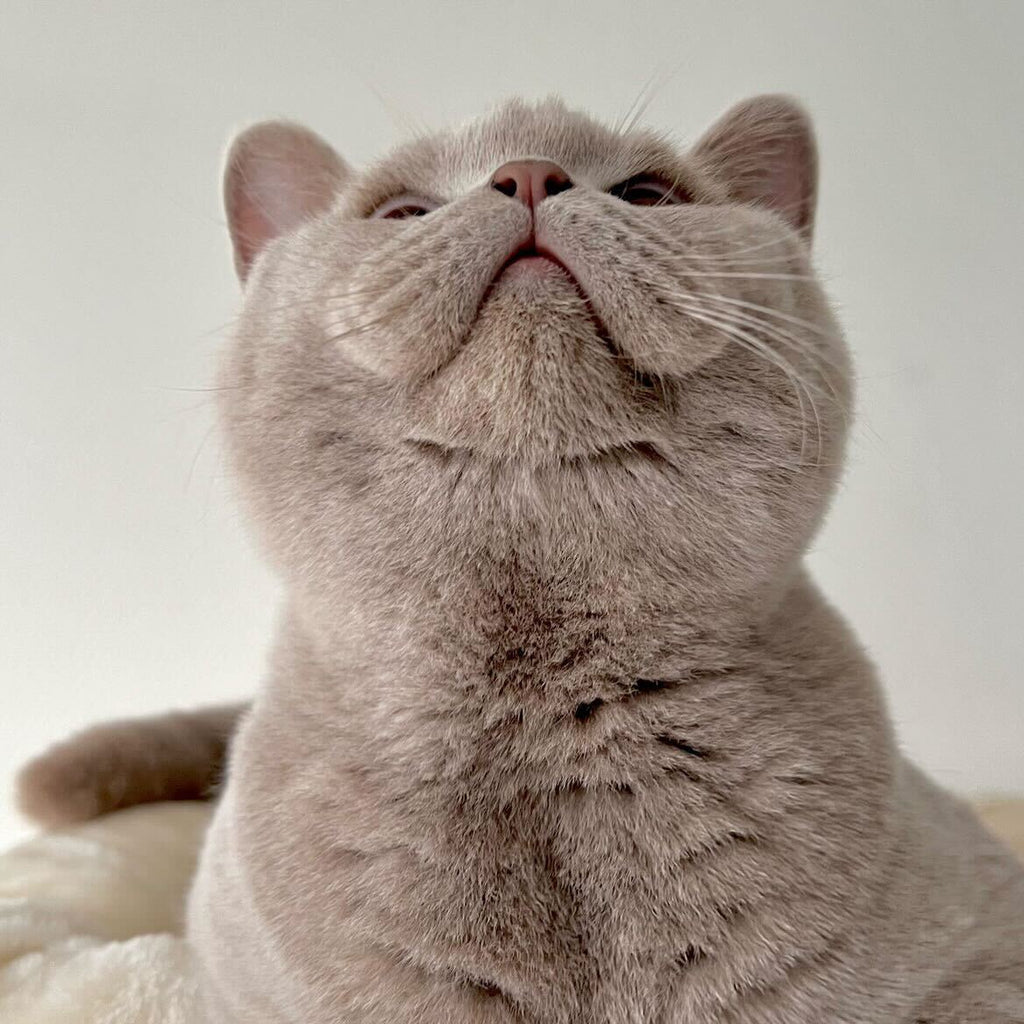
Nacho is a British Shorthair who moved in with his humans in August together with his brother Taco (also a British Shorthair). Since then, they have been inseparable and not only brothers but also best friends. 

Unfortunately, Nacho became ill and they faced an intensive period. Examinations, injections, medications, and no playing with Taco. Nacho was diagnosed with FIP. 

What exactly is this disease? How can you recognize it and how does the disease process progress? 

You read it in this blog. 

Who are Nacho & Taco?

Taco (right) and Nacho (left) are two British Shorthair kittens who came to live with their hoomans in August. They are exactly 3 weeks apart and come from two different breeders but arrived at the house at exactly the same time. Less than two days later they were already best friends and have been inseparable ever since. How sweet is that?

Nacho & Taco are brothers and the very best friends!

Symptoms FIP

In December of last year, it was time to neuter Nacho and Taco. This is usually a relatively minor procedure from which male cats recover quickly. This was not the case with Nacho. Since the operation, she noticed a few symptoms in Nacho.

  • Not playing anymore
  • Sleeping a lot
  • Swollen belly
  • Fever

Especially the swollen belly is the main symptom of (wet) FIP.

Afterwards, they immediately went to the vet with Nacho, but nothing came up from this visit. Of course, you trust the vet's word, but there were still many concerns. Nacho's humans did some research online themselves, and Nacho's symptoms strongly pointed to FIP. The gut feeling was right, and Nacho was eventually diagnosed with FIP.

What is the disease FIP?

FIP is a mutation of the coronavirus for cats. Many cats carry this virus, but only in a small number does it actually mutate into FIP.

There are different types of FIP. Namely:

  • Wet FIP. In this case, the cat develops fluid in its abdomen and/or chest cavity.
  • Dry FIP. In this case, the cat develops inflammations in its body. The inflammations can occur in different organs.
  • Ocular FIP. This is a variant of dry FIP where the eyes are affected and there is inflammation in the eye.
  • Neurological FIP. This is also a variant of dry FIP where the cat has inflammation in the nervous system.

The diagnosis of FIP is often difficult to make. In wet FIP, the swollen belly is often visible and therefore much easier to diagnose. Dry FIP, on the other hand, is much more difficult.

When a cat is already a carrier of the virus, FIP can often mutate after a stressful situation. In Nacho's case, this was the castration.

FIP mainly occurs in young cats up to 2 years old or in older cats. It is said that pedigree cats have a higher chance of developing FIP, but this is not scientifically proven. In principle, any cat could get FIP.

Treatment of FIP

They started treatment for Nacho even before the official results. There was no time to wait. With FIP, every day, sometimes every hour, is crucial and action must be taken as quickly as possible.

Nacho's signs were so clear that the treatment was started immediately. If it wasn't FIP, the medication would not have been harmful.

Nacho is now injected at home every day at the same time for 84 days. At first, this was quite easy to administer but it is becoming increasingly difficult. The liquid burns a lot in his skin and Nacho is in a lot of pain during these injections. Super sad but he is doing really well.

After only four days of injections, Nacho slowly started playing again! After about a week, his swollen belly with fluid also began to shrink.

Only after almost two weeks did the official result from the veterinarian come. If they had waited for this, Nacho would most likely no longer have been saved. If treatment is not started, FIP is almost always fatal for cats. The hoomans sensed this well for their little friend!

If they had waited for the results, it would have been too late to save Nacho

How does Taco deal with his little brother's illness?

At the beginning of Nacho's illness, Taco really wanted to play with Nacho, but this was not possible because he was too sick.

Because of this, Taco sometimes attacked Nacho and Nacho meowed a lot at Taco. At some point, Taco realized that Nacho didn't want to play with him, so he sought attention in other ways. He became extremely hyper at home and often ran through the whole house.

The humans thus became Taco's new toy to prevent him from getting bored. Now they are playing together again!

How is Nacho doing now?

Nacho and Taco's hoomans really see the medication as a miracle cure! Nacho got better quickly and by now he is truly the old Nacho again. He is even more playful than ever.

Until March 15, Nacho must still be injected daily. Two weeks before this, blood tests must be done to see if the treatment needs to be extended.

Once the treatment is finished, there is an observation period of 84 days. During this time, there is still a chance of relapse. It is important that his behavior and weight are closely monitored during this period.

All in all, it is an intensive period, but afterwards they hope to be able to call Nacho a true FIP survivor. His little brother Taco is also very happy about that. You can see that in the photo on the left, right?! <3

Want to know when the next blog goes online?

Sign up for our newsletter and be the first to know about all products, blogs, and more!

Read the next article

In gesprek met de dierenarts

In conversation with the veterinarian

22.01.2024
In this blog, we talk with companion animal veterinarian Karlijn about how to best care for your cat. From the right cat scratching post to a comfortable living environment, Karlijn tells you what is most important.